
Is artificial intelligence god or bad for the environment?
In this workshop, experts examine the environmental cost of artificial intelligence. The talks explore how the rapid diffusion of AI affects energy systems and greenhouse gas emissions, highlighting the role of data centers, electricity generation, and policy choices. Together, they shed light on the conditions under which AI may either exacerbate environmental externalities or contribute to more sustainable emissions pathways, setting the stage for a broader panel discussion.
The event will be held at Scene Realfagsbiblioteket, Vilhelm Bjerknes' hus on March 26th from 14:00 to 16:30 (possibly a little longer).
Here is how to get to the workshop venue.
Program
14:00 Welcome
14:05 Talk: Gino Gancia
14:40 Q&A
14:50 Talk: Shivika Mittal
14:25 Q&A
15:35 Panel discussion
16:30 Closing
During the event a book exhibition on the subject is open on site.
Streaming
The workshop is streamed at the YouTube Channel of the Science Library: https://www.youtube.com/@realfagsbiblioteket
Direct link to streaming: https://www.youtube.com/live/vernms247Jo
Registration
The registration is free, but mandatory to secure the best logistics.
Speakers

Gino Alessandro Gancia (University of Milano-Bicocca)
Bio: Gino Gancia is Full Professor at the University of Milano-Bicocca. He has been Professor of Economics at Queen Mary University of London, Senior Researcher at CREI (Barcelona) and Affiliated Professor of the Barcelona Graduate School of Economics. Gino Gancia received his Ph.D. in Economics from IIES at Stockholm University in 2003 and has been Visiting Scholar at MIT from 2001 to 2003. He is specialized in international trade and macroeconomics. His work focuses on the effects of technological change and economic integration on workers, firms, sectors and countries.
Title: Data, Power and Emissions: The Environmental Cost of AI
Abstract: We study the environmental impact of artificial intelligence (AI) using a novel dataset that links measures of AI penetration, the location of data centers and power plants, and CO2 emissions across US commuting zones between 2002 and 2022. Our analysis yields four main findings. First, exploiting a shift–share identification strategy, we show that localities more exposed to AI experience relatively faster emissions growth. Second, decomposition results indicate that scale effects dominate, while changes in industrial composition exert at most a weak mitigating effect; at the same time, electricity generation becomes more carbon intensive. Third, AI penetration raises dependence on non-renewable electricity. Fourth, proximity to data centers is a key driver of this effect, as nearby power plants shift toward greater fossil fuel use. These findings suggest that, absent a rapid decarbonization of power generation, the diffusion of AI is likely to exacerbate environmental externalities through the energy demand of data centres. This is a joint work with Alessandra Bonfiglioli, Rosario Crinò and Mattia Filomena.

Shivika Mittal (CICERO Center for International Climate Research)
Bio: Shivika Mittal is a senior researcher at CICERO, with ten years’ experience working on energy system modelling and scenario development. Her work focuses on assessing low carbon pathways at global, regional, and national levels using Integrated Assessment Models. She holds a PhD in integrated assessment modeling from the Public Systems Group at the Indian Institute of Management, Ahmedabad, India.
Title: Help or Hindrance? AI and emissions pathways
Abstract: Artificial Intelligence (AI) can influence greenhouse gas emissions both positively and negatively; however, these effects are not currently reflected in recent climate change mitigation assessments. Uncertainties regarding future AI capabilities, adoption rates, impacts on energy systems, and limited data availability complicate the integration of AI impacts into such assessments. We employ an expert-led process to identify plausible impacts and quantify their potential magnitude through 2040. A novel scenario framework is developed to examine the interactions among AI growth, climate policy, and AI policy. Elicited expert insights are translated into illustrative scenarios, which are then evaluated using an integrated assessment model. Projections indicate that cumulative global CO2 emissions by 2040 could range from 11% above to 1.4% below a baseline scenario without AI impacts, depending on the extent of AI growth and policy interventions. These findings underscore both the risks and opportunities associated with AI for emissions outcomes and emphasise the necessity of explicitly representing AI in mitigation scenarios.
Panel discussion
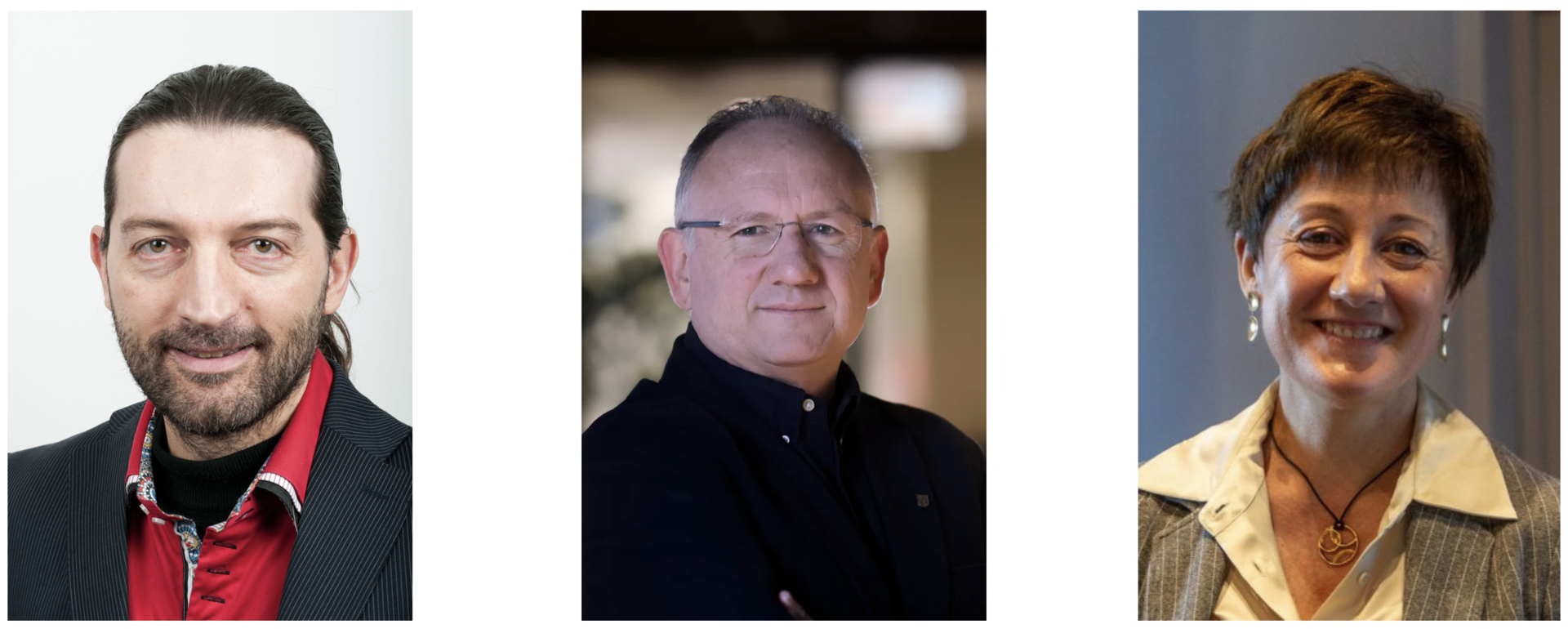
After the presentations, the speakers will be joined by Fulvio Castellacci (TIK Centre for Technology, Innovation and Culture, UiO) and Baltasar Befell-Lozano (Director of SURE-AI, Simula Research Laboratory) for a panel discussion moderated by Giulia Di Nunno (Head of Section Risk and Stochastics, Department of Mathematics UiO).
Book Exhibition
The even is organised in collaboration with The Science Library. An exhibition of books and material related to the topic of this workshop will be standing on site.
For any further information on this, please contact Yutong Shan
You find here description of the core of the exhibition.